
Ion Channel Research Reference
TREK-1: The Leak Channel Researchers Push in Both Directions
TREK-1 is a background potassium leak channel that sets resting membrane potential and responds to membrane stretch, intracellular pH, and lipids rather than to voltage alone. What makes it unusual as a research target is that the literature pushes it in both directions — blocking it to drive BDNF and hippocampal neurogenesis, opening it to hyperpolarize neurons against excitotoxic depolarization.
KCNK2
The gene encoding TREK-1, a member of the two-pore-domain (K2P) family
Polymodal
Gated by membrane stretch, intracellular acidosis, and polyunsaturated lipids
Bidirectional
Blockers are studied for neurogenesis; openers for ischemic protection
Overview
A leak channel, not a gate
TREK-1, encoded by KCNK2, belongs to the two-pore-domain potassium channel family — the K2P channels. Unlike voltage-gated potassium channels, which open in response to depolarization, K2P channels conduct a background or leak current across a wide range of membrane potentials.
That leak is what sets the resting membrane potential. By permitting a steady hyperpolarizing K⁺ efflux, TREK-1 activity holds neurons further from firing threshold, which the literature associates with reduced hyperexcitability and limited intracellular Ca²⁺ overload during ischemic insults.
Expression is concentrated where that matters: cortex, hippocampus, and striatum in the brain, and vascular smooth muscle cells in the periphery. The peripheral expression is why TREK-1 appears in neurovascular coupling and vascular tone research as well as in purely neuronal work.
Mechanism
Polymodal gating — a sensor, not a switch
TREK-1 is described in the literature as a polymodal molecular sensor. Rather than responding to a single stimulus, its open probability integrates several physical and chemical inputs at once.
- Membrane stretch and pressure — highly mechanosensitive. Physical deformation of the lipid bilayer directly increases open probability, without any second messenger required.
- Intracellular pH — activated by intracellular acidosis, the condition a cell enters during ischemia. The channel opens precisely when the tissue is in trouble.
- Polyunsaturated fatty acids — arachidonic acid and related lipids intercalate into the bilayer and open the channel allosterically.
- Temperature — thermal sensitivity is part of the same polymodal profile, which is why TREK-1 also appears in thermosensation research.
The central tension
Why researchers block it and open it
Most ion-channel targets are pursued in one direction. TREK-1 is unusual because both directions have active research programs, aimed at different endpoints.
Blocking the channel removes the hyperpolarizing brake. In rodent models this is reported to mimic the KCNK2 knock-out phenotype — upregulated brain-derived neurotrophic factor (BDNF), increased hippocampal neurogenesis, and antidepressant-like behavioural readouts.
Opening the channel does the opposite at the membrane: more K⁺ efflux, deeper hyperpolarization, and a neuron that is harder to drive into excitotoxic depolarization. That is the ischemia and epilepsy line of research.
The two are not contradictory so much as differently scoped. One targets plasticity and trophic signaling over days; the other targets survival during an acute metabolic insult. Reading either literature as a claim about the other is the most common way to misread this target.
Antagonist
Spadin and PE-22-28
Spadin is a naturally occurring 17-amino-acid peptide derived from the propeptide of the sorting protein-related receptor SORLA. PE-22-28 is a shortened, stabilized synthetic analog developed for higher affinity and better in vivo stability, reported to block TREK-1 with an IC₅₀ near 0.12 nM.
The science: pharmacological blockade removes the leak conductance that holds the resting potential down. In rodent models this is characterized as reproducing the KCNK2 knock-out phenotype without the developmental confounds of a genetic model.
Reported effects: rapid upregulation of BDNF, enhanced hippocampal neurogenesis, and neuroprotective readouts in post-stroke recovery models.
Activator
BL-1249
BL-1249 is a non-steroidal anti-inflammatory derivative repurposed in the literature as a direct TREK-1 opener. It stabilizes the channel's open state, increasing potassium efflux rather than merely permitting it.
The science: the resulting hyperpolarization moves the membrane further from threshold, which is described as making cells resistant to excitotoxic depolarization — the glutamate-driven cascade that converts an ischemic insult into cell death.
Research scope: models of epilepsy, pain signaling, and cerebral ischemia, generally as a tool compound for asking what happens when the leak is amplified.
Not stocked in the Revitalized catalog. It appears here because the antagonist literature is hard to interpret without the opener side for contrast.
Endogenous modulator
Polyunsaturated fatty acids
Alpha-linolenic acid (ALA) and related polyunsaturated fatty acids are endogenous TREK-1 modulators. They intercalate into the membrane, alter its physical tension, and open the channel allosterically — the same mechanical pathway that stretch acts through.
The science: this is the channel's native regulatory input rather than a pharmacological intervention, which is part of why it draws interest. The lipid environment is already tuning TREK-1 continuously.
Reported effects: neuroprotection in rodent models of transient global ischemia, attributed to dampened inflammatory cascades alongside reduced hyperexcitability.
Not stocked as a research compound.
Clinical agents
Volatile anesthetics
Isoflurane and sevoflurane directly activate TREK-1, and this is understood to contribute meaningfully to their central depressant profile — part of how these agents work is a background potassium conductance being turned up.
Research scope: perioperative neuroprotection, asking whether channel activation during surgery blunts ischemic brain injury.
These are regulated clinical anesthetics administered by licensed practitioners. They are named here only because they are a major line of TREK-1 evidence. They are not research compounds, they are not available from us, and nothing in this reference should be read as suggesting otherwise.
Where it sits in our catalog
One of the four is stocked
PE-22-28 is available as a research compound. BL-1249, alpha-linolenic acid, and the volatile anesthetics are referenced for mechanistic context only and are not part of the catalog.
Safety & disclaimers
Research use only — not medical advice
This article is for educational purposes only. It summarizes published research and does not constitute medical advice, diagnosis, or treatment. The findings described are observations from the cited literature, not guidance for personal use.
All Revitalized research compounds are sold for research use only. Not for human consumption, diagnostic, or therapeutic use. Standard institutional biosafety guidelines apply.
Related Compounds
Continue Researching This Category
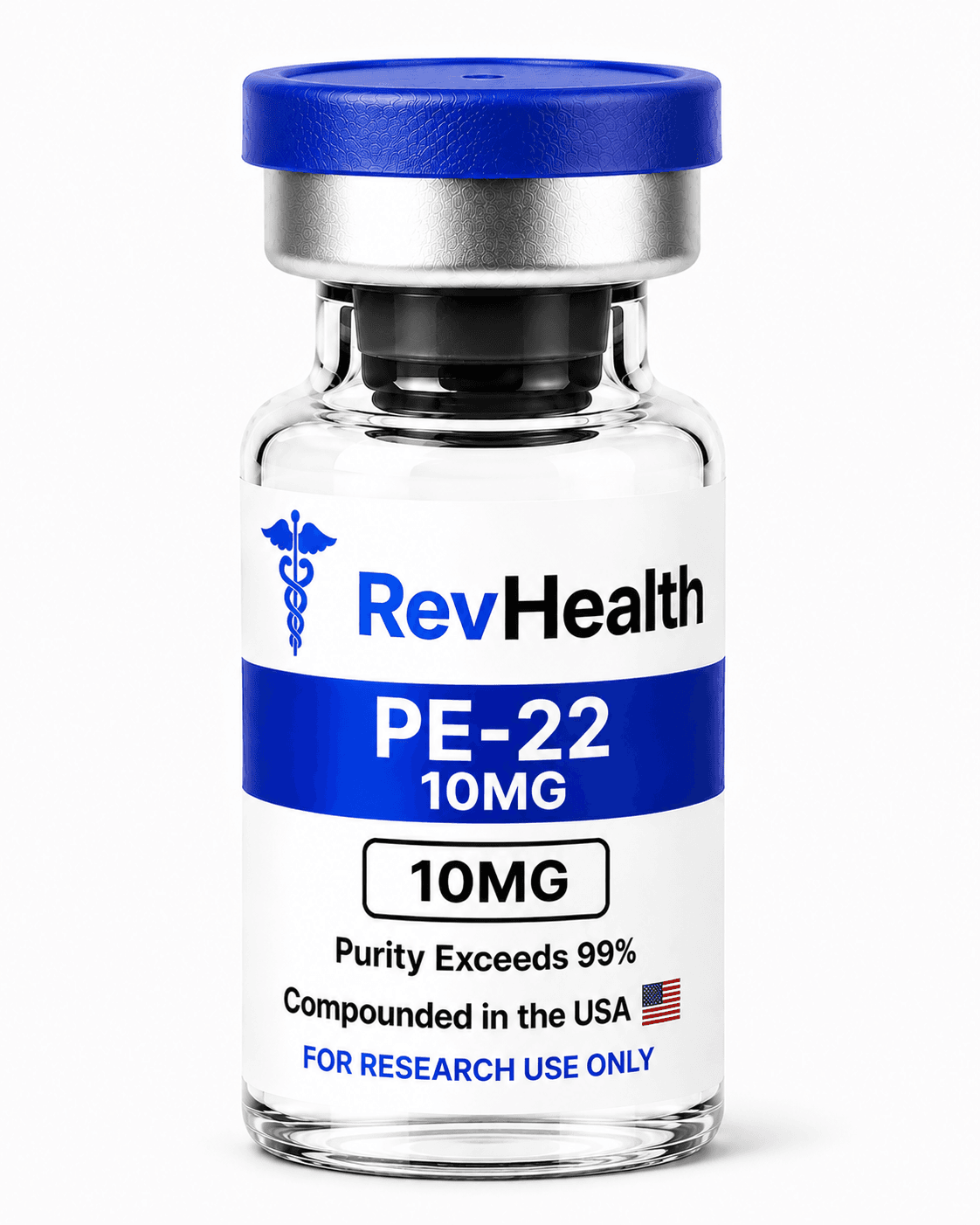
PE-228
Sortilin-derived neuropeptide for TREK-1 channel research
from $75
SEMAX
Nootropic peptide for cognitive and neuroprotective research
from $55
SELANK
Anxiolytic peptide for stress and cognitive research
from $55
DSIP
Delta sleep-inducing peptide for sleep and stress research
from $60
Continue From This Update
Explore the research catalog behind these topics.
Browse verified research compounds with third-party analytical documentation and category-specific product pages.
Shop Research PeptidesResearch use only. This article is educational and does not constitute medical advice. Products referenced on Revitalized Health are not intended for human or veterinary use, diagnostic use, therapeutic use, or consumption.